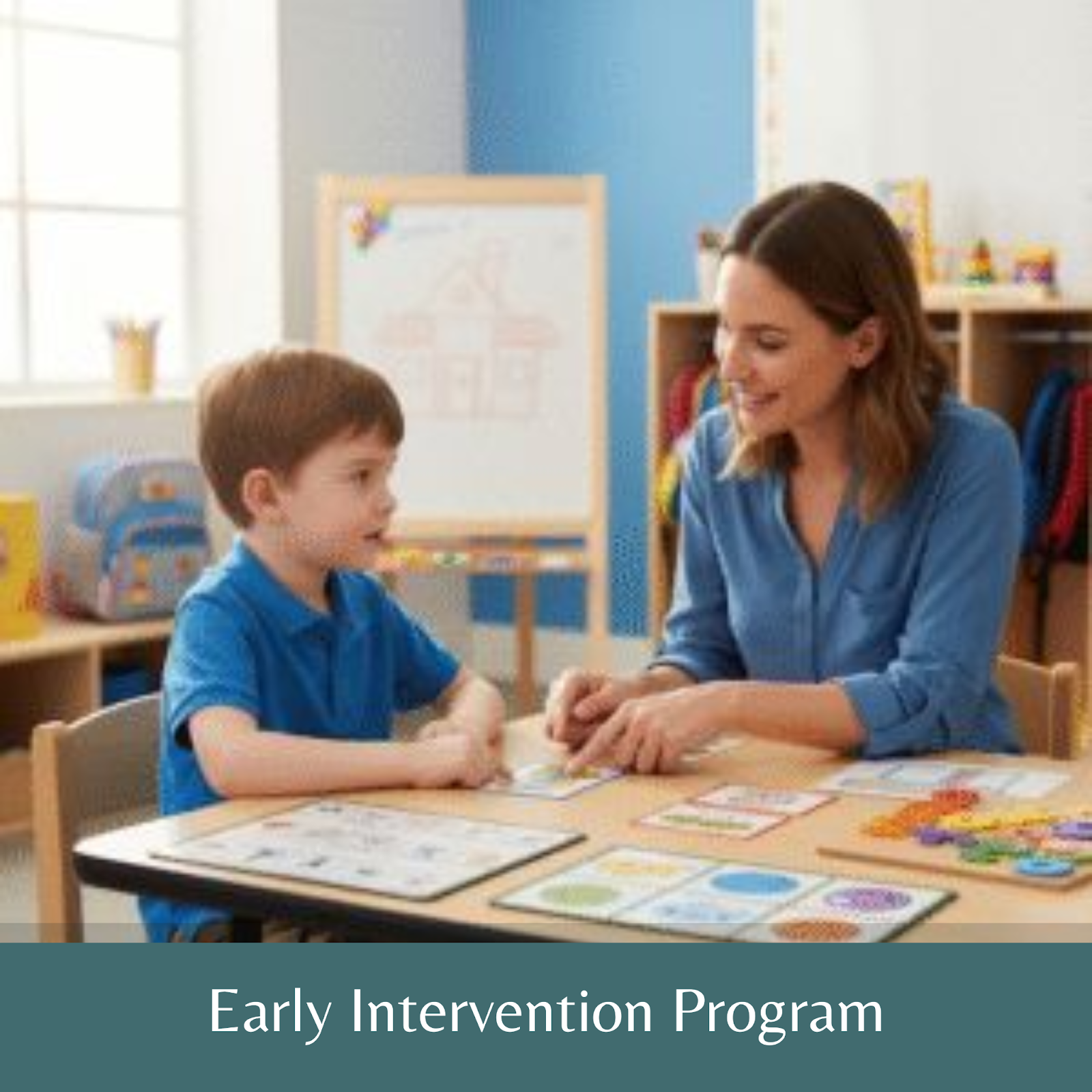
The early years are the foundation of lifelong learning. At Panksh Care, our Early Intervention program is designed to support children during this critical stage through an inclusive, structured, and emotionally safe environment.
“Our model ensures that children with developmental needs receive the right support — without separation, isolation, or labels”
One Classroom, Many Pathways
- All children follow a common learning framework
- Each child may have individual developmental goals
- Support is adjusted within the classroom — not outside it
- Children learn together. Support happens naturally
Our Two-Layer Curriculum Approach
Layer 1: Universal Early Learning
- Play-based learning across developmental domains
- Group routines, stories, music, movement
- Social interaction and emotional skills
- Communication and cognitive development
Layer 2: Targeted Intervention
- Communication goals hidden in playful activities
- Sensory regulation in routines
- Behaviour support
- Fine motor skills & attention skills activities
Support is provided discreetly and respectfully — ensuring growth without stigma.Early Learning & Intervention School
How Learning Happens?
Learning at Panksh Care is active and meaningful. It happens through:
🤝
Guided Peer Interaction
🎲
Structured Play
👨👧👦
Small Group Activities
📅
Predictable Routines
🔁
Repetition in Real Rontexts
Children are active participants in their learning — not passive recipients.
The Role of Adults
Our educators and therapists work collaboratively inside the classroom. They act as:
- Observers of development
- Facilitators of purposeful play
- Models of communication and positive behaviour
- Gentle guides who scaffold learning step by step
Therapists and special educators do not pull children out — they integrate support within the learning environment.
🐣Infant (0–2 Years)
Focus Areas:
- Sensory stimulation & body awareness
- Motor milestone development
- Early communication (eye contact, gestures, sounds)
- Parent–child bonding & interaction coaching
- Routine regulation (sleep, feeding, transitions)
This stage builds the neurological and emotional foundation for future learning.
🌿Playgroup (2–3 Years)
Focus Areas:
- Speech and vocabulary development
- Emotional expression & regulation
- Social interaction & turn-taking
- Fine & gross motor coordination
- Sensory processing support
- Early concept learning
Structured communication and behaviour support are embedded within play.
🌈 Nursery (3–4 Years)
Focus Areas:
- Attention span & listening skills
- Cooperative play
- Pre-literacy foundations
- Pre-numeracy concepts
- Behaviour modelling
- Independent routine participation
Children begin adapting to structured group learning.
🌟 LKG (4–5 Years)
Focus Areas:
- Expressive language clarity
- Independent task completion
- Early reading & number readiness
- Emotional maturity
- Problem-solving skills
- Executive functioning
Therapeutic strategies remain integrated within classroom routines when required.
🚀 UKG (5–6 Years)
Focus Areas:
- Structured classroom participation
- Academic foundations
- Social confidence
- Emotional resilience
- Self-help & independence
- Smooth transition planning to mainstream/inclusive schools
Individual readiness benchmarks are aligned to ensure confident school entry.
Across all groups, we maintain:
✔ Inclusive classroom learning
✔ Individual developmental goals
✔ Embedded therapeutic support
✔ Continuous progress monitoring
✔ Strong parent partnership